1230 Columbia St. Suite 870 San Diego, CA 92101

By Coastal Dental Arts | June 22, 2026
If you have been researching tooth replacement options, you have likely come across two terms that sound similar but work very differently: All-on-4 dental implants and regular dental implants. Both are long-term solutions for missing teeth, and both are rooted in the same core technology. But the similarities mostly stop there.
Whether you are dealing with multiple missing teeth, severe decay, or ill-fitting dentures, knowing which option suits your situation can save you time, money, and unnecessary stress. This guide breaks down the real differences between the two so you can walk into your consultation feeling informed and confident.
What Are Regular Dental Implants?
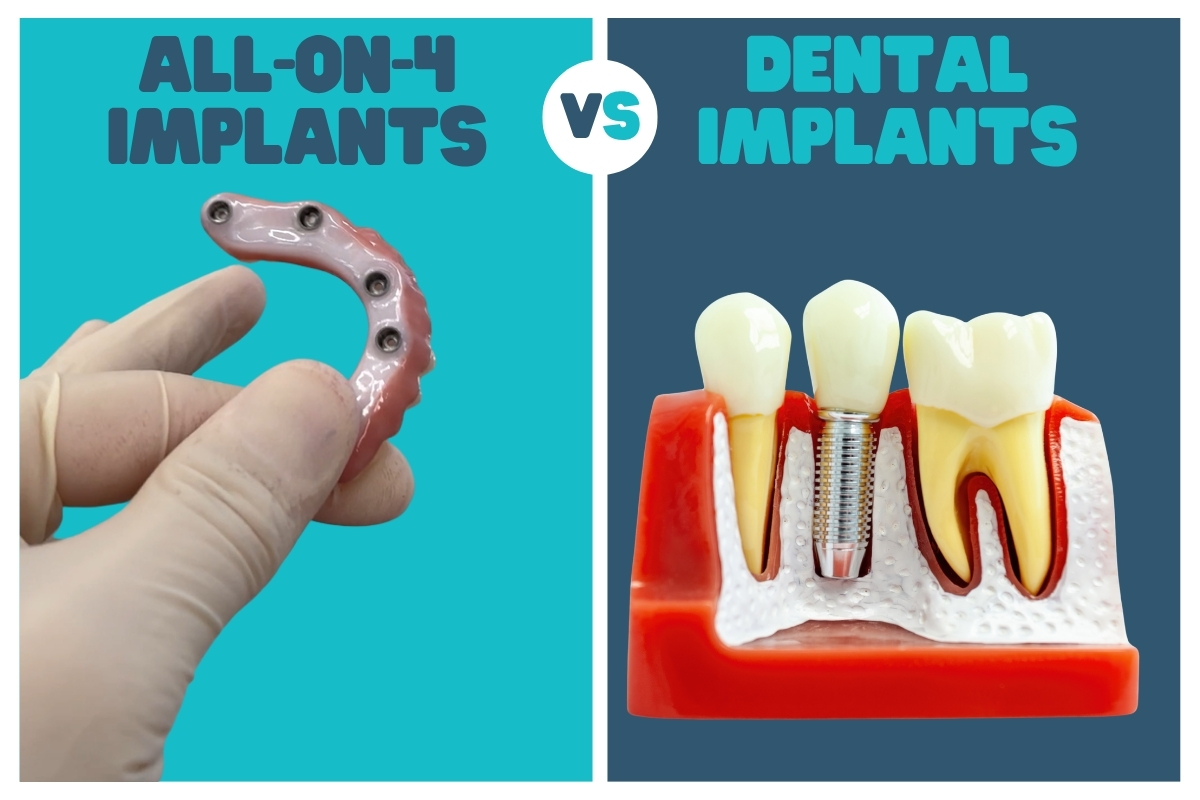
Regular dental implants, often called traditional or single-tooth implants, are designed to replace one tooth at a time. The procedure involves placing a titanium post directly into the jawbone, where it acts as an artificial tooth root. Once the post fuses with the bone through a process called osseointegration, a dental crown is attached on top to mimic the look and feel of a natural tooth.
This process typically unfolds over several months. After the implant is placed surgically, patients must wait for osseointegration to complete before the final crown is fitted. For someone replacing just one or two teeth, this approach works exceptionally well. The result is a stable, natural-looking tooth that functions like the real thing.
However, if a patient needs an entire arch of teeth replaced, traditional implants can require anywhere from six to eight posts per arch. That means more surgeries, more healing time, more cost, and in some cases, the need for bone grafting to support all those individual implants.
What Are All-on-4 Dental Implants?
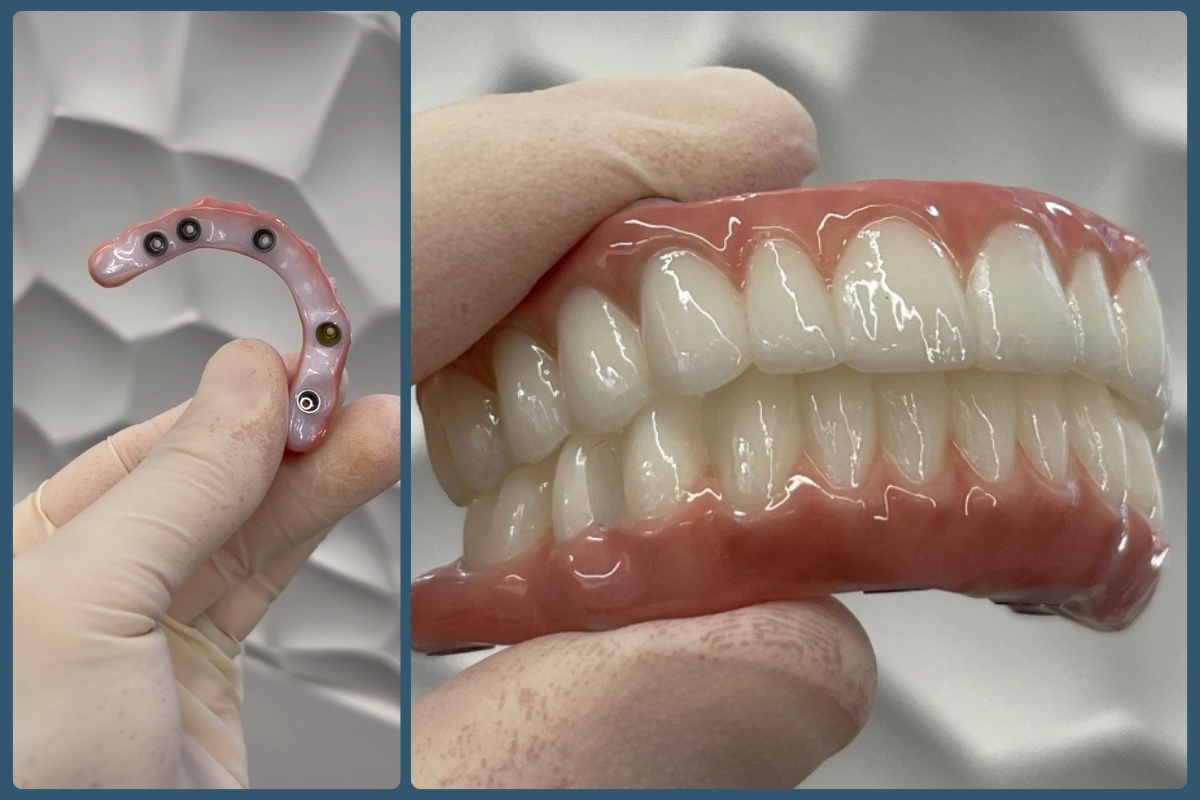
All-on-4 dental implants in San Diego take a fundamentally different approach. Rather than replacing teeth one at a time, this technique supports an entire arch of teeth using just four strategically placed implants. Two implants go in the front of the jaw in a vertical position, and two are angled at roughly 45 degrees toward the back. This angulation is what makes All-on-4 so efficient, as it distributes bite force evenly and reaches areas of denser bone, often eliminating the need for bone grafting.
One of the biggest draws of All-on-4 is the timeline. Because of how the implants are placed, a temporary full-arch prosthesis can often be attached on the same day as the surgery. Patients leave the office with a complete, functional smile without waiting months for osseointegration to fully complete before getting teeth.
For patients who have been living with missing teeth, failing teeth, or uncomfortable dentures, this same-day result can be genuinely life-changing.
Key Differences
Number of Implants
Traditional implants replace one tooth per post. All-on-4 uses just four implants to support a full arch of teeth. For a patient needing twelve or more teeth replaced, the difference in surgical procedures is significant.
Treatment Timeline
With traditional implants, you are generally looking at a multi-stage process spanning several months. The All-on-4 approach compresses much of that timeline, with patients often receiving a temporary prosthesis the same day as placement.
Bone Grafting Requirements
Traditional dental implants in San Diego require sufficient bone density at each implant site. If bone loss has occurred due to prolonged tooth loss or gum disease, bone grafting may be necessary before implants can be placed. All-on-4 implants are angled to take advantage of areas with greater bone volume, making them a viable option for many patients who might otherwise be told they are not candidates for implants.
Cost Considerations
Because traditional implants require individual posts and crowns for each missing tooth, the cost can add up quickly when replacing multiple teeth. All-on-4 dental implants in San Diego consolidate the procedure, often making full-arch restoration more cost-effective than replacing every tooth individually with traditional implants. That said, the upfront investment for All-on-4 is still substantial, and you should ask your dental provider about financing options.
Who Is Each Option For?
Traditional implants are ideal for patients missing one or a few teeth who have good jawbone density and are otherwise in good overall health. All-on-4 is better suited for patients who are missing most or all of their teeth in an arch, have experienced some degree of bone loss, or are currently struggling with removable dentures and want a permanent fixed solution.
All-on-4 vs. Dentures: A Common Comparison
Many patients considering All-on-4 implants are doing so as an alternative to conventional removable dentures. The difference in daily experience is considerable.
Dentures rest on the gums and can shift during eating or speaking. They require nightly removal, soaking, and special cleaning routines. Over time, the bone beneath dentures continues to resorb, causing the fit to change and often requiring relines or replacements.
All-on-4 implants are fixed permanently in place. You brush and care for them much like natural teeth. Because the titanium posts stimulate the jawbone, bone loss is significantly reduced over time. Patients who have made the switch from dentures to All-on-4 frequently report improvements in confidence, comfort, and quality of life.
What Does the All-on-4 Procedure Actually Involve?
For anyone curious about what to expect, here is a general overview of the process:
Initial Consultation and Imaging: Your dentist will take detailed X-rays or 3D cone beam scans to assess your bone structure, evaluate your gum health, and determine whether you are a suitable candidate.
Day of Surgery: Any remaining failing teeth are extracted if needed. The four implants are then placed into the jawbone. A temporary prosthesis, designed to look like a full set of teeth, is attached that same day.
Healing Period: Over the next few months, the implants integrate with the jawbone. During this time, you will follow a modified diet and attend follow-up appointments to monitor healing.
Final Prosthesis: Once healing is complete, your temporary prosthesis is replaced with the final permanent one, custom-crafted to match your facial structure and aesthetic goals.
Are You a Good Candidate for All-on-4 Implants?
Most healthy adults who are non-smokers and do not have uncontrolled systemic conditions like unmanaged diabetes can be considered for All-on-4 dental implants. The procedure is particularly well-suited for patients who:
- Are missing most or all of their teeth in one or both arches
- Have experienced bone loss and were previously told they needed bone grafting for traditional implants
- Are currently using dentures and want a permanent, fixed alternative
- Want to restore full chewing function and a natural-looking smile in a shorter timeframe
A thorough evaluation by an experienced implant dentist is the only way to know for certain whether All-on-4 or traditional implants are right for your specific anatomy and goals.
Caring for Your Implants Long-Term
Both traditional implants and All-on-4 require consistent oral hygiene to perform well over time. For traditional implants, each restoration can be cleaned individually. For All-on-4, your dentist will walk you through specific techniques for cleaning around the bridge and the implant posts. Regular dental checkups play an especially important role in the long-term success of implant-supported restorations.
All-on-4 dental implants have shown impressive long-term outcomes, with studies reporting high patient and implant survival rates over five and ten years when proper care is maintained.
Ready to Explore Your Options for Dental Implants in San Diego?
Choosing between All-on-4 dental implants and traditional dental implants is not a one-size-fits-all decision. It depends on how many teeth you are missing, the current state of your jawbone, your lifestyle, and your long-term goals for your smile. What matters most is getting an honest, personalized evaluation from a dental team that takes the time to actually listen.
At Coastal Dental Arts in San Diego, Dr. David Chotiner and his associates have helped patients throughout the San Diego area, including downtown San Diego, Gaslamp Quarter, Cortez Hill, and the surrounding communities, find tooth replacement solutions that genuinely fit their lives. Whether you are a candidate for All-on-4 implants, traditional single-tooth implants, or a combination approach, the goal is always the same: restoring your smile in a way that feels completely natural and lasts for years to come.
Here is how to take the next step:
- Call us to schedule your implant consultation at our San Diego office
- Visit us at 1230 Columbia St., Suite 870, San Diego, CA 92101
- Ask about our same-day consultation availability and flexible financing options
If you have been putting off addressing missing teeth because you were unsure where to start, this is your sign to reach out. A single conversation with our team can give you a clear picture of what is possible for your specific situation, with no pressure and no guesswork.
Coastal Dental Arts serves patients across San Diego, CA, including those traveling from Chula Vista, La Jolla, Mission Valley, El Cajon, and the greater San Diego metro area. We look forward to helping you take the first step toward a smile that looks great, feels comfortable, and holds up for the long haul.
Frequently Asked Questions
How long do All-on-4 dental implants last?
With proper care and regular dental visits, All-on-4 implants can last many years and potentially a lifetime. The prosthesis itself may need replacement or adjustments over time, but the implant posts are designed to be a permanent solution.
Is the All-on-4 procedure painful?
The surgery is performed under local anesthesia or sedation, so patients typically experience little to no discomfort during the procedure. Some soreness and swelling in the days following are normal and manageable with prescribed or over-the-counter pain relief.
Can I eat normally with All-on-4 implants?
During the healing phase, a soft diet is recommended. Once the final prosthesis is placed and healing is complete, most patients can eat a wide variety of foods comfortably, which is one of the most significant quality-of-life improvements patients report.
What is the difference in cost between All-on-4 and traditional implants for a full arch?
All-on-4 is generally more cost-effective than placing individual traditional implants for an entire arch because it requires fewer posts and usually eliminates the need for bone grafting. The exact costs vary based on the individual case, location, and materials used.
Does insurance cover All-on-4 dental implants?
Coverage varies widely by plan. Dental insurance may cover portions of certain aspects of the procedure, but implants are often classified as a major or cosmetic procedure. It is worth contacting your insurance provider and asking your dental office about financing options.
What is the recovery time for All-on-4?
Most patients return to light activity within a day or two. Full osseointegration takes several months, but because patients leave with a functional temporary prosthesis, daily life is not significantly disrupted during recovery.
Who is not a good candidate for All-on-4?
Patients who smoke heavily, have uncontrolled diabetes, certain autoimmune conditions, or very severe bone loss in specific areas may face higher risks. A comprehensive evaluation will identify any contraindications.
How is All-on-4 different from All-on-6?
All-on-6 uses six implants per arch for additional support, which may be recommended for patients with specific anatomical needs or who want added stability. All-on-4 uses four strategically angled implants to achieve similar results with fewer posts.