1230 Columbia St. Suite 870 San Diego, CA 92101

By Coastal Dental Arts | July 2, 2026
If you already have dental crowns or veneers and you are thinking about straightening your smile, you have probably asked yourself this exact question. The good news is that in most cases the answer is yes. Many patients at Coastal Dental Arts in San Diego wear Invisalign successfully even with existing crowns, veneers, or a mix of both. That said, there are a few important details worth understanding before you start treatment, and that is exactly what we will walk through in this guide.
Whether you are new to Invisalign in San Diego or you have been curious about it for a while, this article will help you understand how clear aligners interact with restored teeth, what your dentist will check before treatment, and how to protect your investment in your smile.
Understanding How Invisalign Works With Restored Teeth
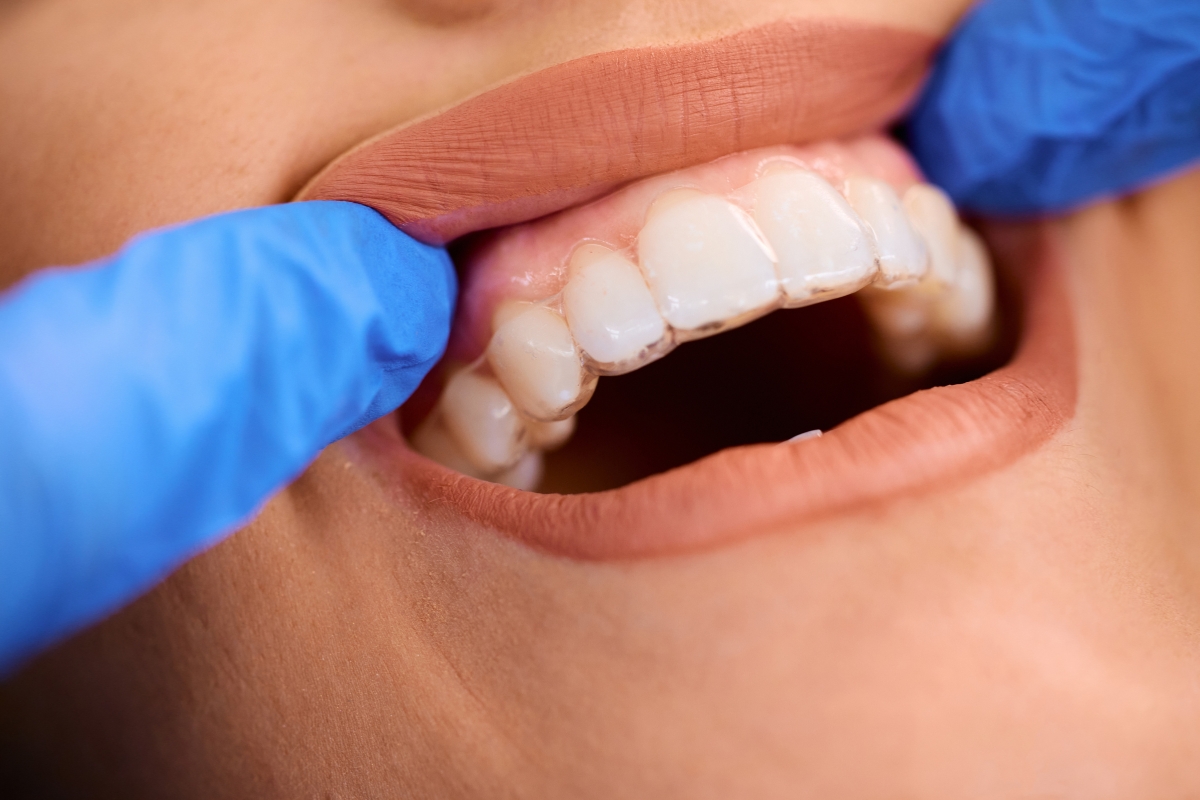
Invisalign uses a series of custom clear aligners that gently and gradually shift your teeth into a straighter position. Unlike traditional metal braces, which use brackets bonded directly to the enamel, Invisalign trays fit snugly over the entire tooth surface, including any crowns or veneers you may already have.
Because the aligners move teeth as a set rather than targeting individual teeth with brackets and wires, a crown or veneer generally moves right along with the natural tooth structure underneath it. This is one of the main reasons Invisalign has become such a popular option for adults who already have restorative dental work and still want to improve their alignment.
Why Crowns and Veneers Require Extra Planning
While Invisalign can absolutely work with crowns and veneers, your dentist needs to evaluate a few specific factors first.
Tooth Movement and Restoration Age
A dental crown covers the entire visible portion of a tooth, so it needs to be securely bonded and structurally sound before any orthodontic movement begins. If a crown is old, loose, or shows early signs of wear, your dentist may recommend addressing that first.
Veneers are thinner and bonded to the front surface of the tooth. Because they are more delicate than crowns, your dentist will look closely at the bonding strength and the condition of the veneer edges to make sure they can handle the pressure of aligner trays over time.
Bite Alignment and Attachment Placement
Invisalign often relies on small tooth colored attachments bonded to certain teeth to help the aligners grip and apply the right amount of pressure. Attachments are usually placed on natural enamel rather than on crowns or veneers whenever possible, since bonding material adheres differently to porcelain or composite restorations than it does to natural teeth. Your dentist will map out a treatment plan that works around your existing restorations while still achieving the movement you need.
Material Matters
Porcelain veneers and crowns are smooth and highly polished, which can sometimes affect how well an attachment bonds to that specific tooth. This does not mean treatment is impossible. It simply means your dentist will plan attachment placement strategically, often using adjacent natural teeth to help guide movement.
What Happens During Your Invisalign Consultation
If you already have crowns or veneers and you are considering Invisalign in San Diego, your first visit will typically include the following steps.
A thorough clinical exam of your existing restorations to check for wear, decay, or bonding issues. Digital scans or impressions to create a 3D model of your smile. A review of your bite and how your teeth currently fit together. A conversation about your goals, whether that is correcting crowding, closing gaps, or improving your overall bite
We use digital impressions instead of messy molds, which makes this entire process faster and more comfortable. Because our team handles cosmetic dentistry, dental crowns, and dental veneers in the same office, we are able to evaluate your existing restorative work and your Invisalign candidacy in a single coordinated visit.
Situations Where Additional Steps May Be Needed
Every smile is different, so it helps to understand a few scenarios where your dentist might suggest an extra step before starting Invisalign.
If a crown or veneer is nearing the end of its lifespan, replacing it either before or after Invisalign treatment may be recommended so the new restoration fits your final tooth position If your bite has shifted significantly since your crowns or veneers were placed, your dentist may want to reevaluate the fit once your teeth are aligned If a tooth has multiple veneers next to each other, your dentist may plan movement carefully to avoid uneven pressure across those teeth
None of these situations rule out Invisalign. They simply mean your treatment plan will be personalized around your specific dental history, which is exactly how orthodontic treatment should work.
Caring for Crowns and Veneers During Invisalign Treatment
Once you begin treatment, a few simple habits go a long way in protecting your restorations.
Remove your aligners before eating so you avoid biting directly on trays with your crowns or veneers. Clean your aligners regularly to prevent buildup that can affect both natural teeth and restorations. Keep up with your regular dental checkups so your dentist can monitor how your crowns and veneers are holding up as your teeth move. Avoid skipping aligner changes, since consistent wear helps keep movement predictable and gentle on existing dental work
These habits are not much different from general Invisalign best practices, but they carry a little more importance when porcelain or composite restorations are involved.
Why Local Care Matters for Combination Treatment
Choosing a dental team that understands both cosmetic dentistry and clear aligner therapy makes a real difference when you have crowns or veneers already in place. Our dentists provide dental crowns, dental veneers, and Invisalign in San Diego under one roof. This means your treatment plan is built around your complete dental history rather than a single isolated service, and any adjustments needed along the way can be handled without bouncing between different offices.
Our San Diego location on Columbia Street has served patients for more than two decades, and our team has experience coordinating restorative and orthodontic care for adults who want a straighter smile without starting their dental work over from scratch.
Having dental crowns or veneers does not automatically disqualify you from Invisalign. In fact, many adults pursue clear aligner treatment specifically because they want to improve alignment around restorative work they already invested in. The key is working with a dental team that evaluates your existing crowns and veneers carefully, plans attachment placement thoughtfully, and monitors your progress throughout treatment.
Every smile has its own story, and yours deserves a plan built specifically around it. If you have crowns, veneers, or a combination of both and you are curious whether Invisalign is right for you, the best next step is a consultation where your dentist can examine your teeth directly and answer your specific questions.
Ready to Find Out If Invisalign Is Right for You
If you are ready to explore Invisalign in San Diego and want a team that understands how to work with your existing crowns and veneers, Coastal Dental Arts is here to help. Call our San Diego office today to schedule your consultation, or book online. Our team will evaluate your smile, answer your questions, and help you decide on the best path toward a straighter, more confident smile.